A Baby Boomer’s Story
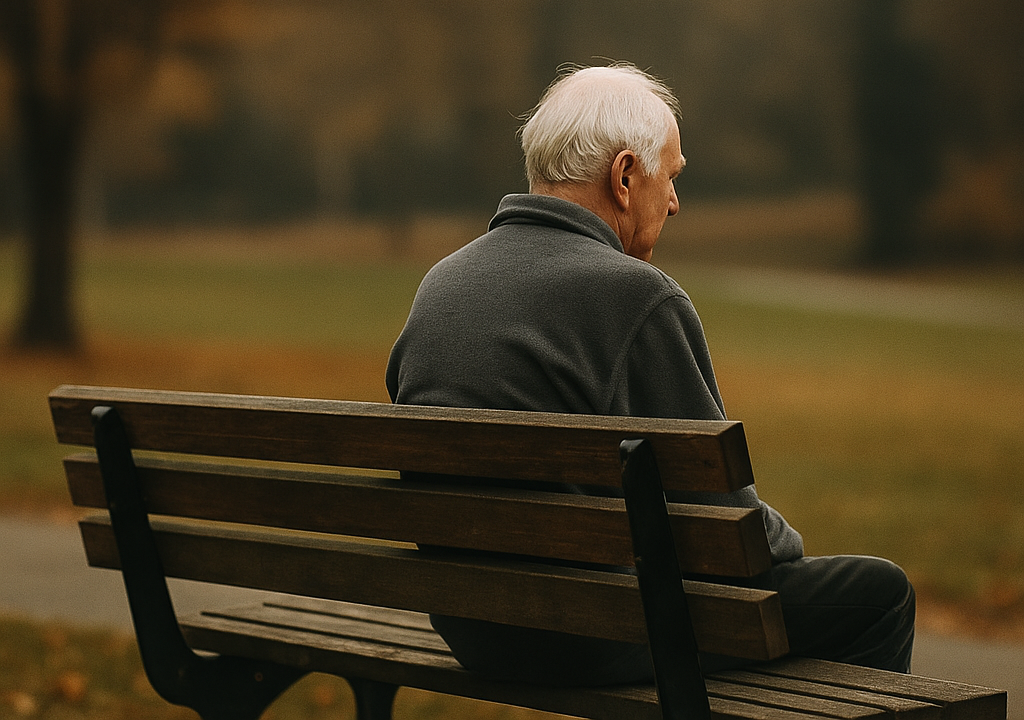
Watching the sunrise on any given morning, I sometimes reflect on what it has been like to be the youngest — and possibly the last — of my family. I knew so little of my parents’ early struggles or of my siblings’ lives as they were formed. By the time I became aware of the world, much of their story had already been written, the majority grown and out of the nest, so to speak. Growing up in post-war America as the youngest sibling had numerous drawbacks.
Dad died in 1958, a few months before I entered public school. Mom left us in 1976, just after I left the Navy. Along the way, brothers and sisters were lost to the vagaries of aging. Our oldest sister died young — of a stroke, of all things. Only two siblings remain now, both several years older than me and carrying more ailments than I have yet to experience despite being well past my seventieth birthday.
There were seven of us in that brood of Pennsylvania hillbillies, born amid the Allegheny ridges in central Pennsylvania, and eventually scattered across the country like oak leaves in autumn — a fitting image, given what our surname suggests. We began under one roof, but life carried us outward in different directions.
The oldest, Ron, or Ronny to family — was nearly twenty years my senior and always the most distant to me. When I was born, he had already enlisted in the military. His life unfolded elsewhere and completely unknown to me at the time. We met occasionally over the years, but rarely spoke in any meaningful way.
My first memory of him wasn’t a brother, but a stranger that I had no recollection of. In photographs, he looked like a movie star — strong, handsome, confident. I don’t remember being bounced on his knee or hugged as a child, but I do carry one vivid memory of him.

First appearance-WXYZ (January 31, 1933)
It was an evening before our father died. I must have been four or five, watching The Lone Ranger on a small television our grandfather had rescued from the Salvation Army.
Those early sets had channel knobs made of Bakelite or other cheap plastic, and the tuner was so stiff that the knobs often broke. To compensate, dad kept a pair of pliers nearby to turn the channel. The pliers were mean, and I was afraid to use them; they pinched my fingers and made me cry.
That evening, after watching the Lone Ranger and Tonto Hi-Ho Silver a bunch of outlaws to jail, I leapt onto my imaginary horse and galloped toward the kitchen. As I rounded the corner near the stairs, the rug slipped from under me. I struck my left arm on the edge of a step and bent it where it ought not bend.
What followed is blurred, but one image remains steady: Ron kneeling beside me, calmly splinting my arm with a rolled newspaper while Mom prepared to take me to the hospital. I remember the smell of ether. I remember waking the next morning in a hospital bed.
By the time I was discharged from the hospital, he had likely already returned to duty. We would not see one another again for several years.
By the time I turned seventeen and had enlisted in the Navy myself, Ronny returned home. His wife abandoned him and he had to give up his career to care for his children. He eventually moved his family in with our mother to help her where they remained for some time after his death in 2015.
I did not attend his funeral. The truth is, we never truly knew one another. He remarried, raised a blended family, and became patriarch to more children and grandchildren than I could count. His life was full and largely separate from mine. Our visits were brief and with little exchange.
Of my remaining siblings, second-oldest brother and I share a closeness that time has strengthened. We live less than an hour apart, speak often, and visit when we can. As age advances, we lean on one another more — not out of weakness, but out of shared memory. It was he who became something of a father figure after my military service ended. We worked together for a time. We rode to and from the job site together. And he stood beside me when our mother — who was living with my family at the time — died unexpectedly.
Being the youngest carried one small advantage: I did not endure the worst of our father’s alcoholism and erratic behavior. For that, I am grateful. Yet there were disadvantages too. I never truly knew what it was to have a steady fatherly example. Ours was a family shaped by silence more than by affirmation. We did not grow up hearing the words “I love you.” Like so many after the wars, growing up as a fatherless child meant learning many lessons the hard way.
But I have come to understand that love is not always spoken. Sometimes it shows up in action — in a brother’s steady hands wrapping a newspaper around a broken arm; in another brother stepping quietly into a father’s place; in siblings who, though scattered, remain connected by shared beginnings.
We were children of the post-war years. Our parents carried burdens they rarely explained. Their generation endured hardship that shaped them in ways we did not fully grasp at the time. Now we are labeled “Baby Boomers,” who, at times, are blamed for the fractures of modern society. Perhaps every generation carries both its strengths and its failings forward.
As the youngest — the tail of the dragon, if you will — I have felt the motion of all that came before me. I did not see the beginning clearly, but I have carried its movement through my own life. And when I watch the sunrise now, I try to not dwell only on what was absent, but think instead of what endured — resilience, survival, and the quiet acts of care that were there, even when they were not spoken aloud.
Share This Story:


Leave A Comment
You must be logged in to post a comment.