
From Toddler To Twilight Years In A few Short Steps
(“Don’t simply retire from something; have something to retire to.” — Harry Emerson Fosdick)
Eleven Thousand New Retirees Every Day!?
Is Your Retirement Being Impacted By This?
According to Alliance for Lifetime Income’s “Peak 65®” work, the U.S. is entering a historic surge of people turning age 65: “more than 4.1 million Americans turning 65 each year through 2027. … What used to be ~10,000 per day over the past decade is now over 11,200 every day.”
Alliance For Lifetime Income
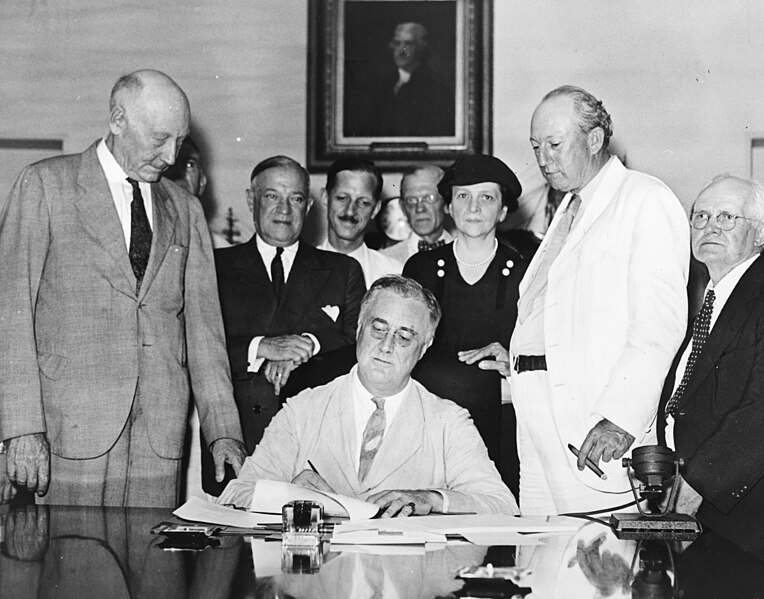
Signing Of The Social Security Act 1935
Where did all these retirees come from:
- The Social Security Act was signed into law by President Roosevelt on August 14, 1935.
- In October of 1929, the “Great Depression” began.
- By the time that FDR was inaugurated president on March 4, 1933, the banking system had collapsed and nearly 25% of the labor force was unemployed.
- Then, on September 1, 1939, a little more than four years after the signing of the act, World War II began. The American workforce was reeling and struggling for survival.
- Then, in 1945, the war ended, the men came home, and BABY BOOM started!
The United States Census Bureau statistics shows that between 1940 — 1960, there was a booming population increase of nearly 45 Million and those 45 million are now at—in—or approaching retirement.
What Does Retirement Look Like for 11.2 Million Retirees Per Day?
We boomers had 65 — 75 years to work, save, and build the money that the government promised would be there for us! So, how much BETTER OFF are we— and how much does it take to be better off?
According to Richard J. Leider, an Education Fellow with the Alliance for Lifetime Income’s, Retirement Income Institute:
While many will struggle financially to live comfortably throughout their retirement, no generation has retired with as much money saved as the Boomers.
Also, according to Rachel Greszler Senior Research Fellow, Roe Institute, who in the Heritage Foundation Newsletter states:
“Despite headlines suggesting a baby-boomer retirement crisis is already underway, older Americans are doing better—as a whole and within all income groups—than any generation before them.”
Well isn’t the latter statement real a whoop-de-do considering that there was no such thing as retirement income before them? The bill was barely signed into law before the Great Depression started, followed by WW-II! So of course the Boomers will have more than anyone before!
So, exactly what is being said in the term: “better off?
America Will Giveth, and America Will Taketh Away!
Born in the early 50s, my wife and I are doing okay at the moment! That, however, does not speak to our future. The greatest fear that we have is outliving our income.
It’s not that our Social Security will run out, or our pensions (despite their miniscule amounts) which are guaranteed until we’re 90 (unless someone decides otherwise). That income, however, is good only if we maintain the status quo, i.e., if nothing drastic happens to either of us, and we are able to care for ourselves indefinitely; etc.
Major Factors affecting Retirees:
-
- Inflation (for every increase in Social Security, there is an offsetting increase in Medicare)
- Rising Cost of Living (aka ‘inflation’, The dollar is always getting smaller)
- Corporate Greed (Squeezing retirees; pushing rental and other prices to the max.)
- Wealth Inequality (Some struggle to pay rent and buy food, while others cruise around the world.)
- Increased Longevity (Modern medicine puts us at risk of outliving our income.)
- Economic Challenges (Finding employment after retiring is often a necessity.)
- Debt Levels (Many lost much of their retirement income to economic downturns, and natural disasters.)
- Social Safety Nets: (Medicare, Medicaid—for low-income retirees, supplemental security Income- (SSI) for disabilities, private pensions, housing assistance, and senior subsidies.)
- Scams and rip-offs (More and more retirees are losing their life’s saving to scammers and charlatans.)
We are capitalists, meaning we all want, live for, work for, and in many cases have to ask for—money. Some have to beg, borrow, and steal money. So, it should not be surprising to anyone that: America has its hand out to take back what every retiree has worked for, all of which can detract from the hope of a comfortable retirement.
Although these are imposing questions, we each need to answer them
HOW DO WE:
- Stretch our income
- • “Top 10 Ways to Prepare for Retirement” from the U.S. Department of Labor gives strategies for maximizing savings and income before and into retirement. DOL
• “Build Wealth Over Time Through Saving and Investing” from U.S. Securities and Exchange Commission (Investor.gov) covers how to make money work for you rather than vice-versa. Investor
- • “Top 10 Ways to Prepare for Retirement” from the U.S. Department of Labor gives strategies for maximizing savings and income before and into retirement. DOL
- Avoid fraud and being taken advantage of by scammers and rip-off artists
- • The National Council on Aging (NCOA) “Scam and Fraud Prevention for Older Adults” page lays out common scams and protective steps. National Council on Aging
• “Retirement fraud and scam protection” from Nuveen dives into the growing threat and how retirees can safeguard their savings. Nuveen
- • The National Council on Aging (NCOA) “Scam and Fraud Prevention for Older Adults” page lays out common scams and protective steps. National Council on Aging
- Secure our savings
- Learn how to budget
- • “Budgeting for Older Adults” on NCOA shows budgeting tips tailored for those on fixed incomes / in retirement. National Council on Aging
• “13 Ways to Stick to Your Retirement Budget in 2025” from AARP walks through concrete budgeting steps for retirees. AARP
- • “Budgeting for Older Adults” on NCOA shows budgeting tips tailored for those on fixed incomes / in retirement. National Council on Aging
- Ensure that our finances outlast our longevity?
- • “How to Manage Longevity Risk in Retirement” from Kiplinger covers the risk that retirees live longer than expected — and what to do. Kiplinger
• “Longevity Risk and Retirement Savings” from Morgan Stanley gives an investment-/planning-lens on this issue. Morgan Stanley
- • “How to Manage Longevity Risk in Retirement” from Kiplinger covers the risk that retirees live longer than expected — and what to do. Kiplinger
Possibly only food for thought, then again, you may find useful answers to your most posing questions among the links above.
We hope that the information found here was informative and helpful. If you found it so, please click below and leave a comment on our page.
PLEASE — IF YOU LIKE WHAT YOU READ, PLEASE LEAVE A COMMENT HERE:
Share This Story:


Leave A Comment
You must be logged in to post a comment.